
The Emperor’s New Codes: Seeing Bias in the Algorithmic Age
A field guide for arbitrators navigating AI-assisted decision-making

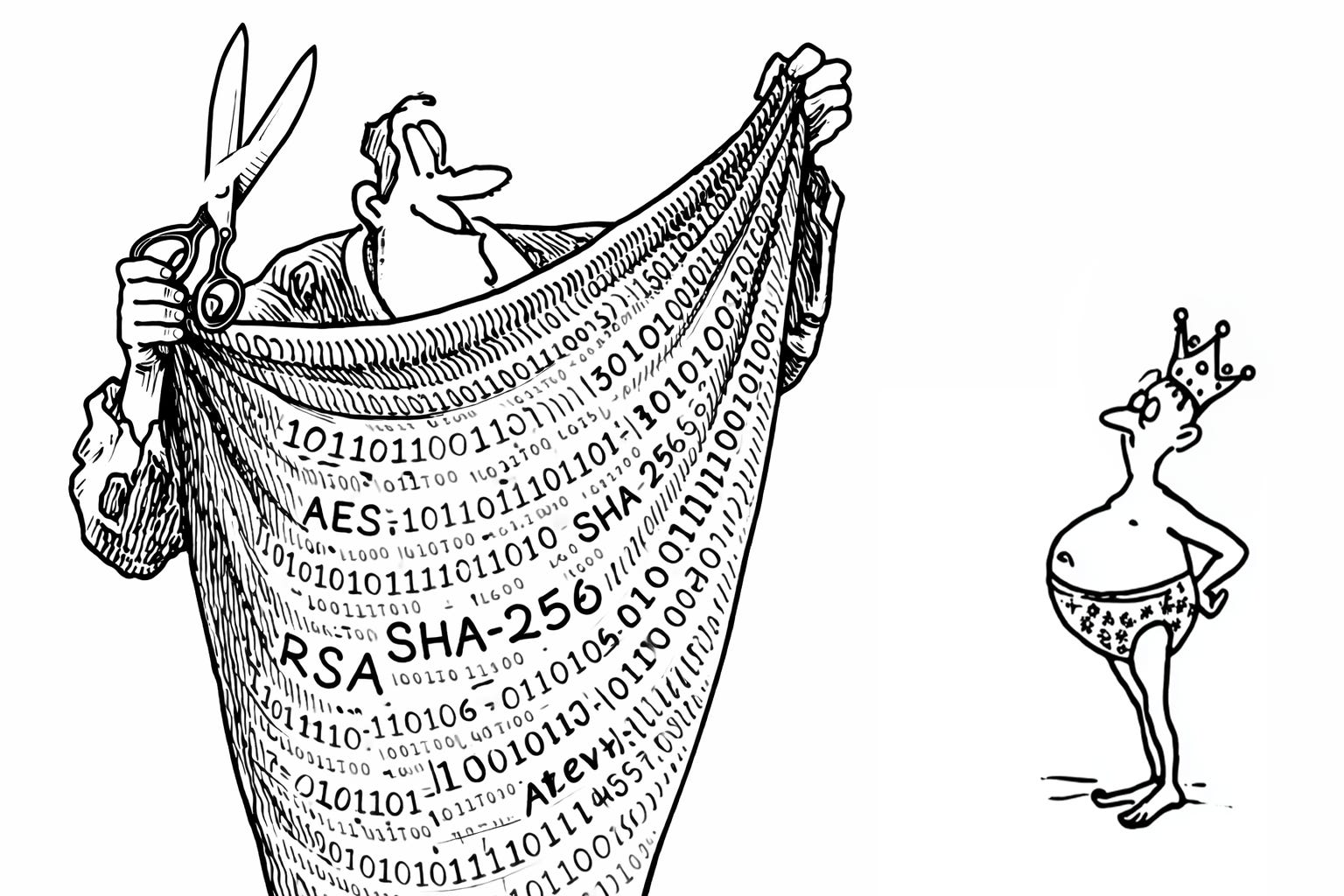
Bias is one of those words that arrives with its own weather. People hear it and brace for a storm: ideological bias, cultural bias, political bias. But in the algorithmic age, “bias” is something both simpler and stranger. It is the tilt that emerges whenever we ask a machine to compress the world into patterns we can use.
Bias isn’t a flaw. It’s a property. Everything that filters reality—eyes, memory, law, language—bends it a little. But AI makes that bending rigid.
For arbitrators navigating disputes that increasingly involve AI-generated evidence, AI-assisted analysis, or questions about algorithmic decision-making, understanding how models bend reality is no longer optional. It is foundational literacy. And like any literacy, it begins with learning to see what is already there.
What Bias Actually Means in AI
In AI, bias is not an opinion. It’s a structural feature. A statistical lean. A tendency wired into a model by what it has seen, what it has ignored, and what its designers have shaped it to avoid.
Three categories matter most to arbitrators:
Data Bias: The Inherited Absence
AI learns from human traces: text, legal documents, case law, news archives, academic papers. If parts of reality are missing from that archive, the model inherits the absence. If one jurisdiction, language, or legal tradition is over-represented, the model inherits the surplus.
Example in practice: An arbitrator using AI to summarize case law asks for precedents on force majeure in construction contracts. The model returns 47 cases—46 from common law jurisdictions, one from civil law. Not because civil law cases don’t exist, but because English-language legal databases dominate the training data. The bias isn’t malicious; it’s statistical. But to an arbitrator adjudicating an international construction dispute under Swiss law, the imbalance could be dispositive.
Research by Bommasani et al. (2021) in “On the Opportunities and Risks of Foundation Models” documents how training data composition directly shapes model outputs, with English-language content representing approximately 92% of training data in major models despite English speakers comprising only 17% of the global population.
Design Bias: The Philosophical Inheritance
Models don’t just absorb data. They inherit the philosophies of their makers. Every model has an internal logic—helpful, cautious, experimental, fast, bold, conservative. Safety tuning, reinforcement learning, guardrails: these are design decisions that shape the personality of the system.
Example in practice: An arbitrator asks two different models to assess whether certain communications constitute an anticipatory breach. Model A hedges extensively, noting seventeen reasons the question cannot be definitively answered without additional context. Model B provides a confident three-paragraph analysis. Neither is “wrong”—they’ve been tuned for different risk profiles. Model A was trained to avoid overconfidence; Model B to minimize user friction. The arbitrator who doesn’t recognize this difference might mistake caution for thoroughness or confidence for competence.
Interaction Bias: The Dance Between User and System
AI is unusually impressionable. Your phrasing, tone, order of questions, or even your uncertainty can nudge a model into a particular shape. Each prompt is a small gravitational pull.
Example in practice: An arbitrator asks: “Can you help me understand the weaknesses in the claimant’s position?” versus “Can you analyze the strengths and weaknesses of both parties’ positions?” The first prompt creates an adversarial frame; the model will search harder for flaws. The second invites balance. Same facts, same model, radically different analytical orientation.
Perez et al. (2022) in “Discovering Language Model Behaviors with Model-Written Evaluations” demonstrate that prompt framing can shift model outputs by up to 40% on factual accuracy tasks, with leading questions producing systematically different responses than neutral queries.
How Bias Manifests in Arbitration Contexts
Bias doesn’t announce itself. It appears in the seams. For arbitrators, five patterns matter most:
Jurisdictional Defaults
Models trained primarily on U.S. and EU legal materials may reflexively apply common law reasoning even when analyzing civil law questions. Ask about “discovery” and the model assumes American-style depositions unless explicitly redirected.
Temporal Compression
Models flatten legal evolution. Ask about the enforceability of arbitration agreements and the model may synthesize cases from 1995 and 2023 without clearly marking the doctrinal shift that occurred in between.
Consensus Bias
Models gravitate toward majority positions. On contested questions — say, the proper interpretation of Article 28 of the UNCITRAL Model Law — the model will favor the interpretation that appears most frequently in its training data, which may or may not reflect the best reasoned position or the position adopted in the relevant jurisdiction.
Hallucination Patterns
Different models fill knowledge gaps differently. A bold model will confidently invent case citations. A cautious model will refuse to answer. Both are forms of bias, one toward saying too much, the other toward saying too little. For an arbitrator relying on AI research assistance, the difference is critical.
Maynez et al. (2020) in “On Faithfulness and Factuality in Abstractive Summarization” found that 70% of neural abstractive summaries contained factual inconsistencies, with legal and technical domains showing higher error rates than general text.
Cultural Translation Failures
Legal concepts don’t translate cleanly. “Good faith” in American contract law is not bonne foi in French law is not Treu und Glauben in German law. Models trained to find equivalences will compress these distinctions unless actively prevented from doing so.

A Brief Aside: Cutting on the Bias
In dressmaking, cutting on the bias means slicing the fabric diagonally, at forty-five degrees to the weave. Do this, and something curious happens. The cloth gains stretch. It drapes differently. It moves with the body instead of resisting it. The same material, the same fibers, the same threads but the angle changes everything.
AI bias works a bit like that.
A model is made of data the way a fabric is made of threads. Straight-grain answers are the ones that follow the warp and weft of the training set. They’re sturdy, predictable, and occasionally stiff. But tilt the question, twist the context, or introduce a structural assumption and suddenly the model stretches. It drapes. It behaves differently.
Every model has its own “grain,” its own hidden geometry. Some fall with a clean line. Some pull unexpectedly at the seams. Some cling; some glide.
And just as an experienced seamstress learns to feel the grain through her fingertips, AI-literate arbitrators learn to sense where a model has stretch and where it has none. You learn to predict how it will fall. You learn when a straight cut will hold its shape and when cutting on the bias will give you something fluid.
Bias, in both senses, is not about right or wrong. It's about understanding the fabric you're working with. Once you understand it, you know what to expect.
The Institutional Architectures of Bias
Different organizations optimize for different values. These institutional priorities echo through every output.
OpenAI (GPT-4, GPT-o1)
Philosophy: Clarity, broad accessibility, moderate risk tolerance
Strength: Structured analytical reasoning, clear explanations
Bias pattern: Gravitates toward consensus positions, hedges on politically contested questions
Arbitration relevance: Reliable for procedural analysis, less useful for novel jurisdictional questions
Anthropic (Claude)
Philosophy: Constitutional AI, ethical awareness, transparency
Strength: Nuanced reasoning on ambiguous questions, explicit about limitations
Bias pattern: Over-cautious on questions involving harm, may refuse helpful analysis
Arbitration relevance: Excellent for multi-jurisdictional analysis, may need coaxing on adversarial content
Meta (Llama)
Philosophy: Open source, developer control, minimal restrictions
Strength: Adaptable, can be fine-tuned for specialized domains
Bias pattern: Highly variable depending on fine-tuning; less corporate safety filtering
Arbitration relevance: Best for specialized deployments; requires careful evaluation
Google (Gemini)
Philosophy: Multi-modal integration, enterprise focus
Strength: Handles complex document analysis across formats
Bias pattern: Optimized for business contexts, less granular legal reasoning
Arbitration relevance: Useful for document review, less reliable for doctrinal analysis
[Note These are general tendencies and fine-tuning, version updates, and deployment contexts can affect behavior.]
When you choose a model, you’re not choosing a tool. You’re choosing a worldview, a set of institutional priorities, and a philosophy of risk. An arbitrator who doesn’t understand this distinction is flying blind.

Practical Techniques for Working with Bias
Bias is not a dragon to be slain. It is a landscape to learn to navigate. Here are specific techniques arbitrators can use:
Technique 1: Prompt for Provenance
Don’t ask: “What does the case law say about waiver of arbitration rights?”
Ask: “What does the case law in [specific jurisdiction] say about waiver of arbitration rights? Please distinguish between pre-2015 and post-2015 cases, and identify any circuit splits or doctrinal shifts.”
This prompt forces the model to make its assumptions visible.
Technique 2: Adversarial Prompting
After receiving an initial analysis, ask:
“What would be the strongest counterargument to this position?”
“What assumptions are you making that might not hold in [civil law/common law/hybrid] systems?”
“What edge cases or exceptions did you not mention?”
“If you were representing the opposing party, how would you attack this reasoning?”
Welleck et al. (2023) in “Generating Sequences by Learning to Self-Correct” show that adversarial follow-up prompts reduce factual errors by 35% and increase reasoning depth in legal analysis tasks.
Technique 3: Multi-Model Triangulation
Use different models as checks on each other. Where they agree, you likely have consensus positions. Where they diverge, you’ve found the contested ground—which is often exactly what matters most in arbitration.
Technique 4: Explicit Framing
Begin prompts with: “You are an expert in [specific legal domain]. Your training data may over-represent [jurisdiction/legal tradition]. Be especially careful about...”
This metacognitive framing activates different parts of the model’s knowledge graph.
Technique 5: Few-Shot Examples
Provide 2-3 examples of the kind of analysis you want before asking your actual question. Models are remarkably good at pattern matching. Show them the pattern you need.
Example:
Here's an example of the level of detail I need:

Question: Is an arbitration clause in a franchise agreement enforceable if the franchisee is an individual?
Good answer: Under Swiss law, yes, but the clause must meet additional transparency requirements under Article 179(1) CO...

Now please answer this question: [your actual question]
Technique 6: Document Model Provenance
In any written decision or legal memorandum that relies on AI assistance, maintain a record of:
Which model and version you used
The specific prompts you provided
When the analysis was generated
What verification steps you took
This isn’t just good practice—as AI-assisted analysis becomes more common in arbitration, it will likely become a disclosure obligation.
Why This Matters for Arbitrators
Three scenarios make AI bias particularly salient in arbitration:
Scenario 1: Evaluating AI-Generated Evidence
A party submits contract language they claim was “drafted by AI” or damage calculations “verified by AI analysis.” An arbitrator must assess not just whether the output is accurate, but whether the AI’s biases might have shaped the result in legally significant ways.
Scenario 2: Using AI as Research Assistant
You’re deciding a complex jurisdictional question involving the interaction of three different national laws. You use AI to survey the relevant precedents. The model’s jurisdictional bias becomes your jurisdictional bias—unless you actively correct for it.
Scenario 3: Assessing Algorithmic Decision-Making
The dispute itself involves an algorithm: credit scoring, employment screening, pricing systems. To evaluate whether the algorithm was discriminatory or violated contractual obligations, you must understand how algorithmic bias works—not in theory, but in practice.
The Emerging Standards
The legal profession is beginning to develop standards for AI use. The ABA’s Resolution 604 (2024) on Generative AI emphasizes the duty of technological competence. Several jurisdictions now require disclosure of AI assistance in court filings.
For arbitrators, the standards are less formal but no less important:
Due Diligence: Understand the capabilities and limitations of any AI tool you use.
Verification: Never rely solely on AI-generated legal research or analysis. Verify citations, check primary sources, and confirm jurisdictional applicability.
Transparency: Consider whether AI assistance should be disclosed to the parties, particularly if it substantially shapes your analysis.
Independence: Ensure AI use enhances rather than replaces independent judgment. The arbitrator’s role is irreducibly human: weighing credibility, assessing context, applying judgment to ambiguous facts.
Conclusion: Discernment in the Algorithmic Age
AI will not replace arbitrators. But arbitrators who understand how models bend reality will think more clearly inside complexity than those who assume the machine is neutral.
In the end, bias isn’t the enemy. The unseen is the enemy.
Once you can see the tilt, you can steer around it.
Once you can name the pattern, you can break it.
Once you understand the worldview of the tool, you can decide when to trust it and when to hold the pen yourself.
The algorithmic age doesn’t demand perfection. It demands discernment.
And discernment, in its oldest sense, means this: the ability to tell one thing from another, to see the contours that others miss, and to navigate complexity with a mind awake to its own shadows.
That is the real skill of this era.
And it belongs to anyone willing to look closely enough.
References and Further Reading
Foundational Research
Bommasani, R., et al. (2021). “On the Opportunities and Risks of Foundation Models.” Stanford HAI Center for Research on Foundation Models. [Comprehensive analysis of bias in large language models]
Bender, E., et al. (2021). “On the Dangers of Stochastic Parrots: Can Language Models Be Too Big?” FAccT ‘21. [Seminal paper on data bias and environmental/social costs]
Perez, E., et al. (2022). “Discovering Language Model Behaviors with Model-Written Evaluations.” OpenAI Research. [Demonstrates prompt sensitivity and interaction bias]
Maynez, J., et al. (2020). “On Faithfulness and Factuality in Abstractive Summarization.” ACL 2020. [Critical for understanding hallucination patterns]
Welleck, S., et al. (2023). “Generating Sequences by Learning to Self-Correct.” ICLR 2023. [Evidence for adversarial prompting effectiveness]
Legal and Ethical Frameworks
American Bar Association (2024). “Resolution 604: Generative AI and the Legal Profession.” [Establishes duty of technological competence]
Legg, M., & Song, J. (2024). “AI in International Arbitration: Promise and Peril.” Journal of International Arbitration, 41(2). [Specific to arbitration context]
Whittlestone, J., et al. (2019). “The Role and Limits of Principles in AI Ethics.” Journal of AI Ethics. [Philosophical foundations]
Practical Guides
Anthropic (2024). “Constitutional AI: Harmlessness from AI Feedback.” Anthropic Research. [Understanding design bias in Claude models]
OpenAI (2023). “GPT-4 Technical Report.” OpenAI Research. [Transparency about model capabilities and limitations]
Mollick, E. (2024). “Co-Intelligence: Living and Working with AI.” Portfolio/Penguin. [Accessible introduction to practical AI use]
Specialized Resources for Arbitrators
Malek, B., et al. (2024). "SVAMC Guidelines on the Use of Artificial Intelligence in Arbitration." Silicon Valley Arbitration & Mediation Center. [First comprehensive guidelines for AI use in arbitration practice]
International Chamber of Commerce (2024). “Guidance Note on the Use of Artificial Intelligence in ICC Arbitration.” [Practice-specific guidance]
Global Arbitration Review (2024). “AI and Arbitration: A Practical Guide.” [Case studies and practitioner perspectives]
UNCITRAL (2023). “Technical Notes on Online Dispute Resolution.” [Framework applicable to AI-assisted processes]
Model-Specific Documentation
Claude Documentation: https://docs.anthropic.com
OpenAI Documentation: https://platform.openai.com/docs
Google AI Documentation: https://ai.google.dev
Meta Llama Documentation: https://llama.meta.com
Ongoing Resources
Stanford HAI: https://hai.stanford.edu [Regular updates on AI bias research]
Partnership on AI: https://partnershiponai.org [Cross-organizational guidance]
AI & Law Forum: Various university law schools maintain active research programs
Note to Readers: This article reflects the state of AI technology and arbitration practice as of January 2026. Both fields are evolving rapidly. For current information on specific models or practices, consult the documentation and research resources listed above.
This article is researched and illustrated with AI tools (ChatGPT, Claude and Midjourney)
This is part of TechCred’s ongoing series on practical AI literacy for legal professionals. For questions or to suggest future topics, reach out through Substack.