
The Arbitrator's Mandate Is Older Than AI
From Sacheri v. Robotti (1989) to P v. Q (2017) to ARIHQ (2026) — why the rule that decided Quebec's annulment was already on the books

By Prof. Barry Appleton, FCIArb, Faculty Director, ABA TechCred Program; Co-Director and Distinguished Senior Fellow, Center for International Law, New York Law School; Fellow, Balsillie School of International Affairs.
This is a TechCred essay drawing on a forthcoming SSRN working paper, After ARIHQ: The Non-Delegable Arbitration Mandate in the Age of AI. It is the second piece in the TechCred series on the ARIHQ decision.
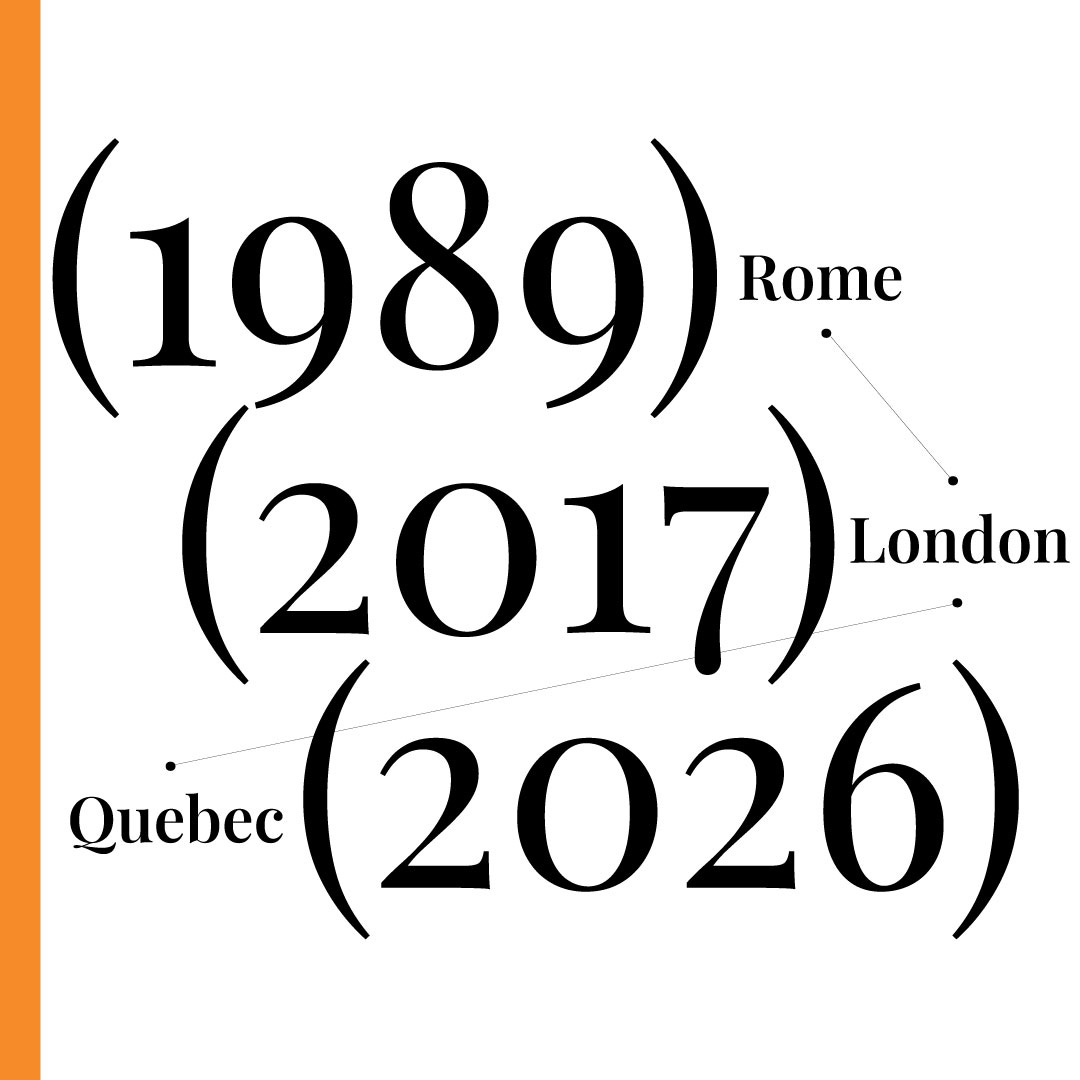
When the Quebec Superior Court annulled the arbitral award in ARIHQ v. Santé Québec on April 22, 2026, much of the international arbitration community treated the decision as new law. It is not. The doctrine that decided ARIHQ — that an arbitrator cannot delegate the substantive reasoning of an award to a third party, whether human, institutional, or algorithmic — has been the rule since 1989. ARIHQ applied an old rule to a new delegate.
That distinction matters. If ARIHQ announced a new doctrine, arbitrators would be entitled to wait for further case law before adjusting their practice. If ARIHQ applied an existing doctrine to AI, arbitrators are already bound by it everywhere the doctrine runs — which is everywhere arbitration runs.
This piece traces the lineage. The forthcoming SSRN working paper, After ARIHQ: The Non-Delegable Arbitration Mandate in the Age of AI, develops the argument in full and situates the doctrine in a wider three-layer framework of arbitral governance (lex arbitri, lex data, lex AI). What follows is the doctrinal spine.
The Italian Origin: Sacheri v. Robotti (1989)
The earliest articulation of the personal-mandate doctrine in modern arbitration came not from a common-law court but from the Italian Court of Cassation. In Sacheri v. Robotti, decided in 1989, the Court held that an arbitrator who relied on a non-arbitrator expert to perform the substantive analysis on which the award rested had improperly delegated the adjudicative function. The remedy was annulment.
The reasoning has aged remarkably well. The Court did not say that arbitrators may never consult outside expertise. It said that when the outside party performs the reasoning that produces the result, the arbitrator has substituted a different decision-maker than the one to whom the parties consented. Party autonomy is the engine of arbitration. What the parties bargain for is the personal judgment of the arbitrator they selected. When that judgment is supplied by another, the bargain has not been honoured.
Sacheri established what comparative arbitration scholars would later call the rule of intuitus personae — the arbitrator’s mandate is personal to the arbitrator. It is found in Gary Born’s International Commercial Arbitration, in Gaillard and Savage’s Fouchard Gaillard Goldman, in Redfern and Hunter, and in every major treatise written in the last thirty years. The principle is not contested. The only contest is over its application.
The English Codification: P v. Q (2017)
Twenty-eight years after Sacheri, the question reached the English Commercial Court in a different form. Tribunal secretaries had become a normal feature of LCIA, ICC, and ad-hoc arbitrations. Some parties suspected that the line between administrative assistance and substantive delegation had been crossed. In P v. Q [2017] EWHC 194 (Comm), Mr Justice Popplewell took up the question directly.
Popplewell J. acknowledged what he called “considerable and understandable anxiety in the international arbitration community” about tribunal secretaries becoming “fourth arbitrators.” His ruling drew the line where Sacheri had drawn it. A secretary may perform research, prepare summaries, manage logistics, and even prepare drafts for the tribunal’s consideration. What a secretary may not do is “express a view on the substantive merits of an issue or application.” The reasoning of the award must be the tribunal’s reasoning.
The English judgment matters because it confirmed that the personal-mandate doctrine survives translation across legal traditions. Sacheri had been an Italian civil-law decision construing Italian arbitration law. P v. Q applied the same logic under section 24 of the English Arbitration Act 1996. The convergence is not coincidence. It reflects the deep structural feature of arbitration: the arbitrator’s authority is a personal delegation from the parties, and personal delegations do not sub-delegate by their own force.
Institutional codification followed. The ICC’s Note to Parties and Arbitral Tribunals on the Conduct of the Arbitration at paragraphs 184 to 194 limits the role of administrative secretaries. The Young ICCA Guide on Arbitral Secretaries (2014) makes the same distinctions in practitioner-facing form. France’s Code de procédure civile Article 1450 goes further still: “La mission d’arbitre ne peut être exercée que par une personne physique.” The arbitrator’s mandate may be exercised only by a natural person. Germany’s ZPO § 1035(5), Scotland’s Arbitration Act 2010 Schedule 1 Rule 3, and the case law of Canada, Australia, and the Netherlands all converge on the same point.
By the time ARIHQ arrived in Quebec, the doctrine had a forty-year lineage and a consolidated foundation in the leading treatises and statutes.
The Quebec Application: ARIHQ (2026)
ARIHQ v. Santé Québec did not invent the personal-mandate doctrine. It applied it to a new delegate. The arbitrator in ARIHQ had delegated the substantive reasoning of the award to a generative AI system. The reasoning rested on five citations. All five were fabricated by the AI. The award was annulled.
The four doctrinal pillars Justice Sheehan invoked — personal mandate, reasoned award, the secret of deliberation, and delegatus non potest delegare — were not Quebec inventions. They were the framework that Sacheri, P v. Q, the ICC Note, the Young ICCA Guide, and Article 1450 had together built. The first piece in this TechCred series traced the four doctrines in detail. What that piece left for this one is the genealogy.
What changed with ARIHQ is the delegate, not the rule. Tribunal secretaries, paralegal researchers, librarians, drafting assistants, and language interpreters have accompanied arbitrators for decades. None of them ever became a fourth arbitrator, because the doctrine drew the line at substantive delegation. Generative AI is a new tool with a different risk profile — its outputs are persuasive even when wrong, its hallucinations are difficult to detect, and its reasoning style mimics the reasoning style of arbitral awards. Those properties make verification more important, not less. They do not change the doctrine. They change the discipline required to apply it.
Why the Lineage Matters for Arbitrators Now
If the personal-mandate doctrine were new, arbitrators could reasonably wait for institutional guidance and further case law before adapting their practice. Because the doctrine is forty years old, the obligation is already in force. ARIHQ did not impose a new duty. It made visible a duty that has always been there.
Three operational consequences follow:
First, an arbitrator who uses a generative AI tool to draft any portion of an award must independently verify every statement of fact, every citation, and every line of reasoning before that draft becomes part of the award. The verification cannot be delegated to the AI itself. Asking a model to check its own work is not verification — it is recursion within the same delegate. The doctrine requires verification by the arbitrator personally.
Second, the arbitrator’s reasoning must be the arbitrator’s reasoning. Reasoning generated by a machine and adopted without independent judgment is not the arbitrator’s. The award may carry the arbitrator’s signature, but the personal-mandate doctrine looks at the substance of the deliberation, not the format of the signature. Sacheri and P v. Q are both clear on this. ARIHQ applied the principle to AI without difficulty because the principle was already in place.
Third, disclosure is the operational corollary of the doctrine. Where AI use materially affects the integrity of the decision-making process, the parties must be told. They cannot exercise informed consent — to the arbitrator they selected, to the procedures they agreed to, and to the award they receive — unless they know how the reasoning was produced. The disclosure obligation is not a separate rule grafted onto arbitration. It is what the personal-mandate doctrine has always required, surfaced by the new delegate’s distinctive risk profile.
The Institutional Framework Catches Up
In the year before ARIHQ, the major arbitration institutions issued AI guidance that, in retrospect, anticipated the doctrinal application Quebec would make:
The SVAMC Guidelines on the Use of AI in Arbitration (April 30, 2024), Guideline 6: “Arbitral decision-making cannot be delegated to AI.”
The CIArb Guideline on the Use of AI in Arbitration (March 2025, updated September 2025): “arbitral functions should not be delegated to AI.”
The VIAC Note on the Use of AI in Arbitration Proceedings (April 2025): AI may not substitute for the arbitrator’s reasoning.
The SCC Guide to the Use of AI (October 16, 2024): AI use raises questions about the arbitrator’s independent judgment.
The CIETAC Guidelines on Generative AI in Arbitration (effective July 18, 2025): first AI-specific rules from a major Asia-Pacific institution; tribunals must not delegate the adjudicative function.
The AAA-ICDR Guidance on Arbitrators’ Use of AI Tools (January 2026): disclosure required where AI materially affects the process or reasoning.
These instruments did not announce a new prohibition. They translated Sacheri and P v. Q into operational language for the AI use case. ARIHQ then translated the same principle into a judicial holding.
What This Means for the TechCred Practitioner
The personal-mandate doctrine has three implications that every TechCred-trained arbitrator should be operating against today.
The first is genealogical confidence. When a party suggests in a procedural conference that the arbitrator should be free to use AI as the arbitrator sees fit because no court has yet ruled definitively on AI delegation, the answer is that Sacheri, P v. Q, the ICC Note, and Article 1450 have all ruled, and ARIHQ has confirmed that the rule applies to AI. The doctrinal foundation does not need to be invented.
The second is disclosure-readiness. A procedural-order template that includes an AI disclosure clause, a verification protocol, and a record-of-tools provision is not a defensive document. It is a transparent application of the personal-mandate doctrine that Sacheri established. Practitioners drafting procedural orders for tribunals they sit on or appear before should treat AI disclosure language as part of the standard set, not as an optional or experimental add-on.
The third is institutional alignment. The institutional guidance has moved faster than the case law because the institutions saw the doctrinal point earlier. The SVAMC and CIArb Guidelines, the VIAC and SCC Notes, the CIETAC Guidelines, and the AAA-ICDR Guidance are not soft-law speculation. They are the operational form of an old hard-law principle. Practitioners working under those institutional rules are working with the doctrine, not around it.
Looking Ahead
The forthcoming SSRN working paper, After ARIHQ: The Non-Delegable Arbitration Mandate in the Age of AI, develops the doctrine at length and traces its consequences for enforcement under the New York Convention and the Federal Arbitration Act. It situates the personal-mandate doctrine within a wider tripartite framework of arbitral governance: lex arbitri governs procedural validity, lex data governs informational sovereignty, and lex AI governs the digital tribunal. The companion working papers on each layer will be available on SSRN in parallel.
For arbitrators reading this in the present moment, the operational message is short. The doctrine you are accountable to is forty years old. The application to AI is new. The discipline of disclosure, verification, and human judgment is what the doctrine has always required. ARIHQ did not change the rule. It made the rule unmissable.
Where TechCred Comes In
Bridging old doctrine to new practice is the curricular mission of the ABA TechCred Program, the first internationally accredited certification in AI, digital innovation, and technology dispute resolution. Sponsored by the ABA International Law Section and credentialed by New York Law School, TechCred trains arbitrators to operate the personal-mandate doctrine under the conditions that generative AI has now created — verification protocols, AI disclosure clauses, procedural-order templates, hallucination-detection workflows, and the data-sovereignty implications of using cloud-based AI tools in cross-border proceedings.
The Fall 2026 program is now open for registration.
Further Reading
Primary sources
ARIHQ v. Santé Québec, 2026 QCCS 1360 (Que. Sup. Ct. Apr. 22, 2026) (Sheehan J.C.S.) — canlii.ca/t/kkjtm
P v. Q [2017] EWHC 194 (Comm) (Popplewell J.) — bailii.org/ew/cases/EWHC/Comm/2017/194.html
Sacheri v. Robotti, Italian Court of Cassation (1989) — discussed in Born, International Commercial Arbitration (3d ed. 2021)
German ZPO § 1035(5)
Institutional guidance
CIArb Guideline on the Use of AI in Arbitration (March 2025, updated September 2025)
VIAC Note on the Use of AI in Arbitration Proceedings (April 2025)
AAA-ICDR Guidance on Arbitrators’ Use of AI Tools (January 2026)
Empirical
Damien Charlotin, AI Hallucination Cases Database (1,455 entries as of May 17, 2026)
Forthcoming
Barry Appleton, After ARIHQ: The Non-Delegable Arbitration Mandate in the Age of AI (SSRN, May 2026)
Companion working papers: The Lex AI, Lex Data, Arbitration Hacked, AI and International Arbitration: A Comprehensive Listing
Earlier in this series
Prof. Barry Appleton, FCIArb, is the Faculty Director of the ABA TechCred Program, Co-Director and Distinguished Senior Fellow of the Center for International Law at New York Law School, and a Fellow of the Balsillie School of International Affairs. He is a dual-licensed (Canadian and American) lawyer with three decades of experience in North American trade, commerce, and investment law and a continuing scholarly focus on the intersection of AI governance and international arbitration.
 | A guest post by
|